
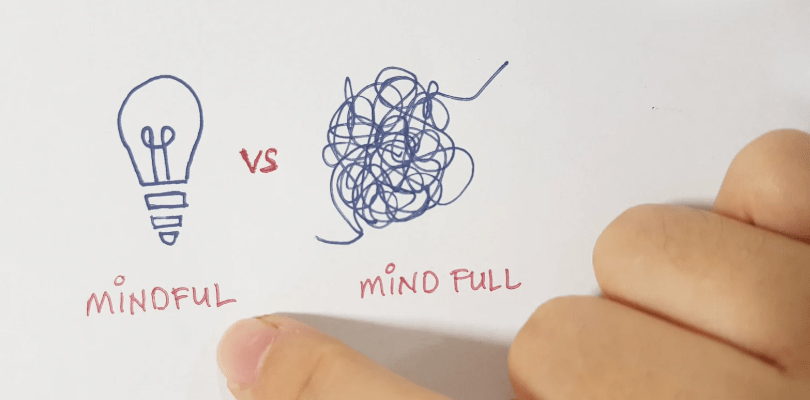
At Growth By Design, we believe intentional choices lead to impactful growth, whether you’re shaping a thriving organization or a meaningful life. Here, we provide the practical information, tools, and frameworks to get you there. Today, let’s confront the leader’s impulse to rush, how rushing harms the brain, body, and the results you’re able to achieve, and discuss the science-backed way you can move more methodically through your day.
In the ceaseless pace of leadership life, being told to slow down feels not just counterintuitive, but nearly insulting. How can I possibly slow down? I’ve got deadlines. I have a team of people relying on me. I have a to-do list that is longer than ever. I get it – I’m a close friend of chronic rushing: I have always had a crammed schedule, working full time while completing higher education full time – and the cherry on top is I have worked exclusively in fast-paced industries.
Fellow rushers, I ask you to stick with me in this post where I walk you through the neuroscience and psychology research that reveal a compelling paradox: by embracing “go slow to go fast,” we unlock not only productivity and clarity but also protect our long-term mental and physical health.
The Paradox of Slowing Down
I’ve realized over time that slowing down is a superpower. When I slow down, it means I am focusing in on what is important, letting go of the urge to do more, more, more and focusing my attention on moving the big rocks that make the most progress.
For leaders and high performers, it’s easy to equate busyness with accomplishment. I know for me this was deeply true. But over the years, I’ve realized that the constant rushing was not met with the accomplishment necessary to outweigh the physical and mental toll. Instead, I’ve come to realize that deep work and authentic leadership emerge not from rushed activity, but from present, mindful engagement. In fact, in the moments where I have slowed down, I not only accomplish things faster because I am able to focus my attention on one thing, but I am able to accomplish more because I am methodically moving through each activity. Ergo, the paradox.
“When you slow down, you prioritize presence over productivity. You learn to be fully engaged in whatever you’re doing, whether it’s work, spending time with loved ones, or simply enjoying a meal. This mindset shift enhances the quality of your experiences.”
– Charlotte Ashley-Roberts
What Leaders Lose When Rushing
Rushing triggers our body’s stress response, even when it’s “just” about a boardroom deadline or an overflowing inbox. This fight-or-flight state surges our cortisol and adrenaline, which are critical hormones to help us survive short-term threats, but are deeply harmful in the context of our modern-day chronic stress.
The tricky nature of our modern-day chronic stress is that it doesn’t necessarily have to be “real” to be threatening and damaging. The same hormones (cortisol and adrenaline) that spiked when our ancestors were running from a tiger now spike when we are running toward a deadline. One of these scenarios is life-threatening, the other is perceived as life-threatening.
Studies show that feeling rushed impairs executive functioning – even when that rush is only perceived, not real. In fact, a Brandeis University study found that perceived urgency impairs executive function as much as real threats. Over time, this chronic stress damages important parts of your brain, like the prefrontal cortex and hippocampus. Why does this matter? The prefrontal cortex is responsible for planning, focusing, and decision-making.
This constant rushing, sometimes called “hurry sickness,” not only erodes executive function and decision-making capacity, but also fosters emotional exhaustion and increases irritability. Physically, the repeated activation of your sympathetic nervous system reduces immune function, and is linked to higher risk for conditions like hypertension and heart disease.
Leaders have to be mentally and physically ready to handle big tasks – we don’t need to be adding on additional stress by rushing through our responsibilities!
“You can’t stop the waves, but you can learn to surf.”
– Jon Kabat-Zinn
How to Go Slow to Go Fast: Key Takeaways
- Start your day with conscious breathing or a brief mindfulness exercise. The habit matters more than duration.
- Block distraction-free focus times for your most important work—even 20 minutes helps.
- Notice triggers that make you hurry; experiment with pausing instead of rushing.
- Practice single-tasking—commit to one thing at a time to boost both focus and results.
A Better Path Forward
Slowing down boosts neural pathways associated with gratitude, contentment, and overall happiness. Mindfulness practices such as conscious breathing and slowing down can help retrain your brain, reduce hurry sickness, boost focus, and restore emotional balance. For me, making this a daily practice has helped build a proactive resistance to rushing and design my day where I am more intentional about moving slowly, thoughtfully, and strategically.
Below is one of my favorite guided meditations to help me get into this space:
Growth means developing the wisdom to know: slow is smooth, and smooth is fast.
By choosing to go slow, you create space for the clarity and innovation that fuel true, sustainable growth. After all, “the mind is like water. When it is turbulent it’s difficult to see. When it’s calm, everything becomes clear.”
There is so much more to cover about the harms of chronic stress on your mind and body, but I hope this brief post has inspired you to start confronting your rushing ways and intentionally work to let go. Books like Rushing Woman’s Syndrome by Dr. Libby Weaver and The Art of Letting Go by Nick Trenton are two of my favorites that dive deep into the research on chronic stress and give practical tools for how to live differently.
So friends, I hope you take time today to notice when you rush, pause, and choose to go a little slower. I promise, with intentionality, you will find yourself more productive, happier, and healthier.
Onward and upward!
Katie
 Growth By Design
Leave a comment